Materials, explained / 6 min
Glass, steel or silicone: choose for the lunch you pack
Start with the meal, the journey and the way you reheat it. The material label is only one part of the decision.
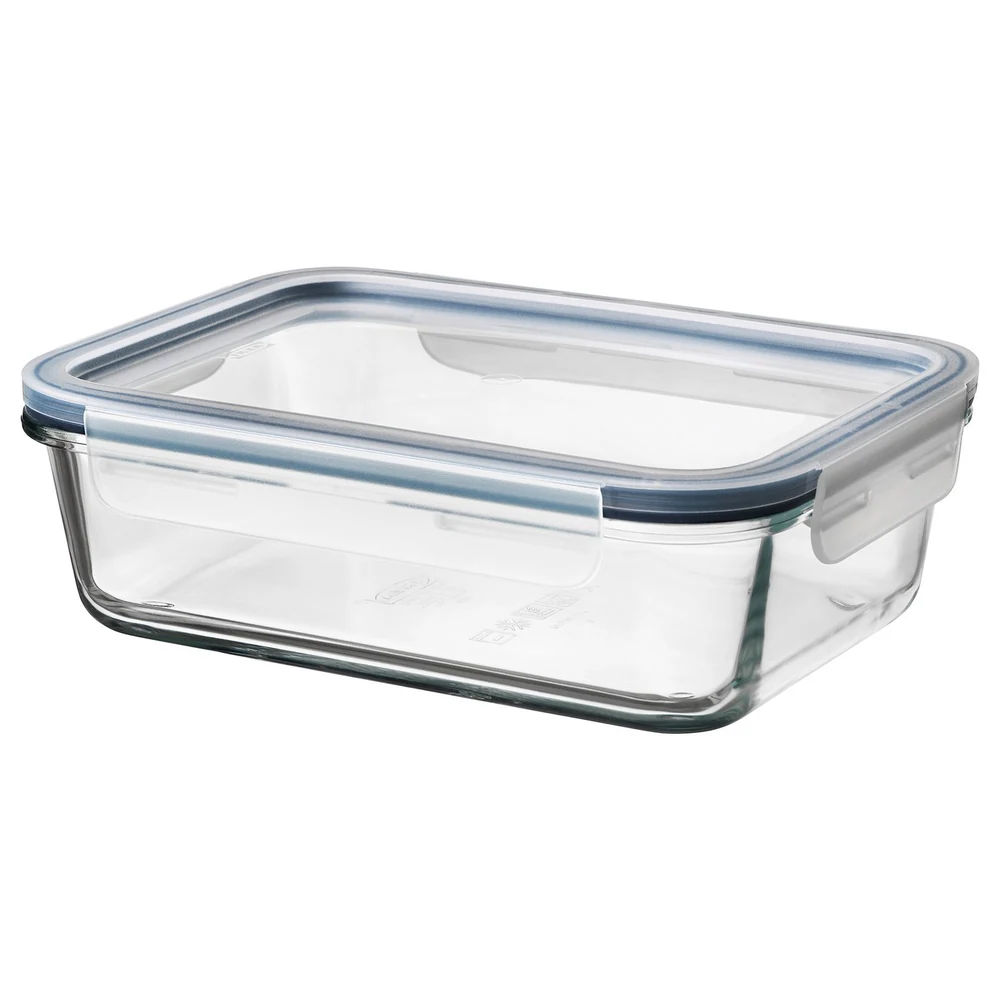
A container that works beautifully on a fridge shelf may be awkward to carry to work. One that fits a school lunch may be the wrong shape for soup. Decide what you are asking the container to do before comparing materials.
Map three moments: filling, carrying and cleaning
What do you put inside? Does it travel upright in a bag or sit on a shelf? Can you reach the corners and remove the seal to clean it? Those questions are more useful than choosing a material in isolation.
| Format | A reason to compare it | What to check |
|---|---|---|
| Rigid glass body | You want to see the contents. | Weight, breakage guidance, lid material and permitted heating. |
| Steel body | You prefer a rigid metal vessel. | Closure, sealing components and exact heating instructions. |
| Flexible silicone bag | A flexible shape fits the food and available space. | Opening, drying access, shape when full and heating directions. |
Follow instructions for the exact body and lid
Do not assume that an oven-safe body makes its lid oven-safe. IKEA’s selected glass/plastic combination illustrates why the parts need separate attention. Follow the product and appliance instructions together.
FDA guidance says to use microwave-safe cookware and generally discourages metal in microwave ovens. Some individual products have specific microwave directions; never generalize those directions to other steel containers or ignore the appliance’s guidance.
Turn a broad safety promise into a specific check
FDA’s food-contact framework considers a substance’s intended use, potential migration and exposure. A material name alone does not establish that switching containers improves health. We compare documented construction and use limits, not a universal safety ranking of glass, steel and silicone.
Try the size before the set
Measure a normal portion and the inside of your bag. Check whether the pack contains the number of useful containers you expect: a seller’s piece count may include lids. A single item that gets used every weekday can be a better purchase for you than several shapes you never reach for.
Ask about the part most likely to need replacing
A removable seal or separately sold lid is worth investigating. Verify compatibility and current availability. We do not infer a guaranteed lifespan or a life-cycle advantage from the word “reusable”.
Compare food-storage options · Read the IKEA 365+ analysis.
Sources & editorial limits
This is an AI-assisted, source-based explainer. Product documentation and linked guidance support specific statements; they do not establish our own product tests or a universal health or sustainability ranking.